- Call our jargon free hotline
- 01527 908646
- hello@lucidcomputersolutions.co.uk


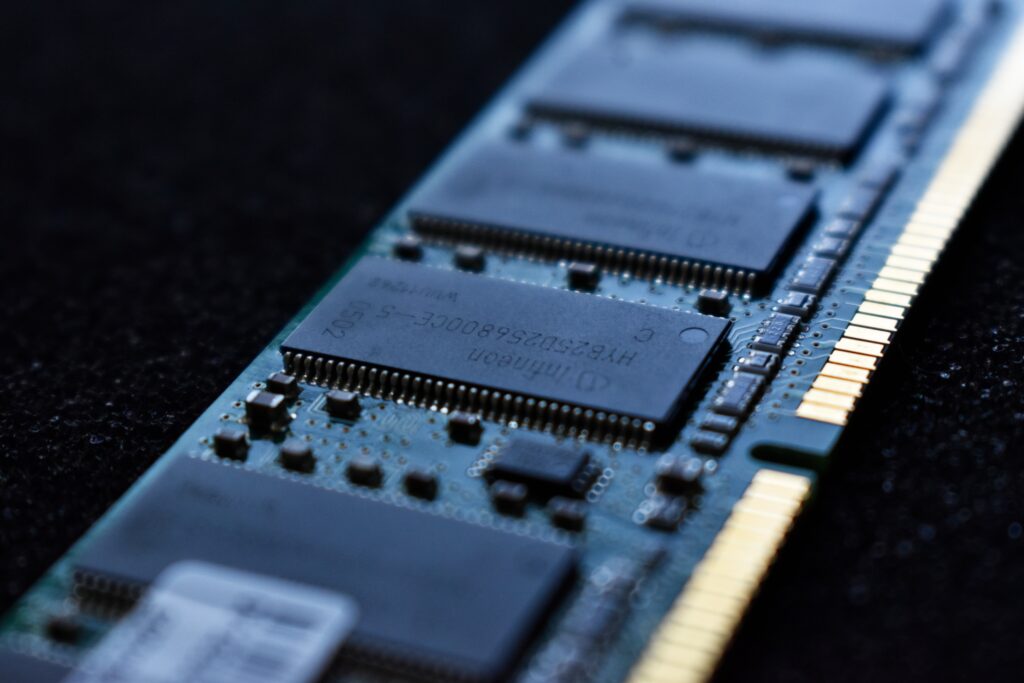
How much memory (RAM) is enough?
Memory – the more you have, the happier your computer performs. We’re not talking about storage space, we’re referring to the memory used to launch applications, referred to as RAM.
With many aspects of computer performance, there’s always a balance to be had between performance and cost. Spent too little on a computer, and it’s probably going to be painfully slow, spend too much, and it might be a waste of money with no clear performance benefit for what you do.
The question is, how much memory is enough? Let’s take a look at some common options.
4GB of Memory
This is too little. There’s simply no argument to be had for running just 4GB of Memory. You’ll struggle just to run a few web browser tabs, and getting applications like Microsoft Office could well prove to be a struggle. Never purchase a computer with just 4GB of Memory in, and if you’re running an older computer with 4GB, we strongly recommend seeing if you can add in another 4GB at least to take it up to 8GB.
8GB of Memory
This is commonly found to be the sweet spot. And most of the time it probably is. For people using computers for work though, our recommendation would be to consider 16GB, unless your work involves only a couple of web browser tabs and one or two applications running at a time. 8GB is commonplace for new computers, as it brings that balance between cost and performance. 8GB will probably be ok for you, but if you want to futureproof yourself, then go for 16GB.
16GB of Memory
This is where we think you should be. 16GB should always be enough for pretty much everyone apart from the CAD designers of this world. It will give your computer plenty of performance, and won’t break the bank to achieve. As running web browser tabs becomes ever more intensive, having 16GB will allow you to run a number of them without problems. Alongside that, running the likes of Microsoft Office and Zoom will be just fine. We highly recommend that all businesses go for 16GB of memory in their computers, ideally.
Gavin Moorhouse is the owner of Lucid Computer Solutions, an IT Support business based in Redditch, Worcestershire. He produced this article using a computer that has 8GB of memory. His laptop has 16GB.


